
Why the Best Poker Players in the World Play Live and Online — And How You Can Too
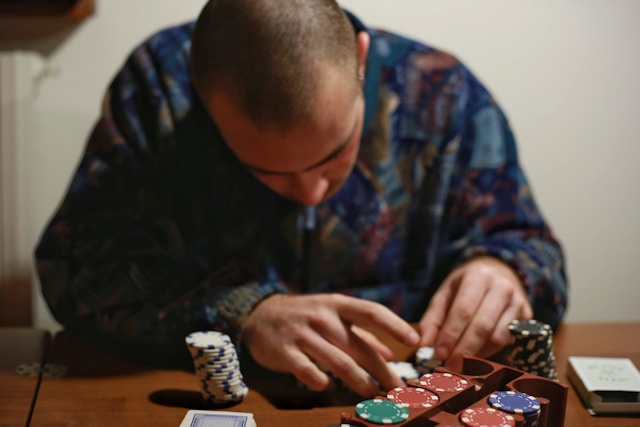
There's a quiet divide in the poker world. On one side, you have the live grinders — the guys who only trust a felt table, a physical deck, and eye contact. On the other, you have the online players who can multi-table in their pajamas and log a thousand hands before noon. Both camps tend to look down on the other. And that's exactly why neither is reaching their full potential.
The players climbing the fastest right now? They're not picking a side. They're playing both — deliberately, strategically. And they're using each format to fix the weaknesses the other one creates.
What Live Poker Teaches You That Software Never Will
Sit at a real poker table for a few hours and you'll pick up on things no training app can simulate. The way someone's breathing changes before they push all-in. The half-second pause before a continuation bet that's a little too long. Live poker is a human game first — cards second.
Physical reads, table dynamics, and the social pressure of sitting across from a real person all sharpen a specific kind of awareness that online play simply doesn't develop. Casino poker rooms also carry a different energy. You learn to manage your emotions in real time, in public, with money on the line. That's pressure that translates into better discipline everywhere else.
What Online Poker Teaches You That the Casino Floor Won't
Live poker is slow. You might play 25 to 30 hands per hour at a casino table. Online, that number can hit 400 or more if you're multi-tabling. That volume gap is enormous when you're trying to build pattern recognition.
Online play forces you to make fast, instinctive decisions — and then immediately confront your results. Over time, that builds a kind of mathematical muscle memory that live players who never go online often lack. Pot odds, range balancing, bet-sizing discipline — these concepts sharpen much faster when you're seeing hundreds of hands a session rather than dozens.
The Leak That Kills One-Format Players
Here's where it gets interesting. Exclusive live players often develop a weakness: they rely too heavily on reads and not enough on math. They'll call down with weak holdings because 'something felt off' about their opponent — and bleed chips when they're wrong.
Online-only players have the opposite problem. They're comfortable with numbers but emotionally underprepared for live environments. Sitting in a tournament with a verbal clock being called on them, a stare from across the table, and a crowd watching — that's a completely different kind of test that hours of online grinding don't prepare you for.
Cross-training patches both leaks. When a live regular starts playing online consistently, their hand reading gets sharper because they can no longer rely on tells. When an online grinder plays live tournaments, they discover emotional and social edges they never knew existed.
How to Structure Your Hybrid Practice
You don't need to flip your routine overnight. A simple starting point: use online sessions to drill fundamentals — position play, bet sizing, and pre-flop ranges. Use live sessions to practice everything that happens above the neck — composure, reading opponents, and adapting to table dynamics.
For players who want to build the online side of their game without leaving home, finding a reliable platform matters more than most people realize. If you're looking for a solid entry point into structured online poker, WE88 offers a well-rounded environment where casual players and serious grinders alike can get consistent volume in at stakes that make sense for their level.
The Bigger Picture: Poker Is One Game, Not Two
The best way to think about this isn't 'live vs. online.' It's more like a sprinter who also trains long-distance — not because sprinters run marathons, but because the stamina and aerobic base makes them faster in the short burst
Poker is poker. The fundamentals don't change between a casino room in Macau and a browser window at midnight. What changes is the environment — and how well you've prepared for each one is what separates the recreational player from the one who consistently books wins across both.
Pick up one format. Get comfortable. Then deliberately introduce the other. Give it three months of honest, structured effort, and you'll be surprised how much faster the pieces come together.